
Men’s Nylon Underwear: Is It Better for Stretch, Shape and Heat

Nylon underwear can be a good choice for men when the fabric, cut and size match how they want the garment to feel. Nylon alone does not guarantee breathability, stretch or a cooler fit. Check the complete blend, fabric construction, lining and coverage before deciding whether a pair works for daily wear, travel or movement.
Explore Men’s Underwear
Find underwear designed for fit, support, color, comfort, and a cleaner modern look.
Is Nylon Underwear Good for Men, or Bad?
For everyday comfort, the useful question is how the particular pair fits and feels. A nylon blend may suit someone who likes its texture and silhouette, while another man may prefer a cotton-based fabric. Neither material name automatically makes the finished underwear comfortable or uncomfortable.
Start with the product label. Textile Exchange identifies nylon as a group of polyamides, so a label may use either term. Then check any spandex or elastane content, the cut and the size recommendations. A material name is a starting point, not a complete description of the underwear.
Is Nylon-Spandex Underwear Breathable?
The fiber names alone do not establish how much air or moisture passes through a finished fabric. Nylon-spandex underwear can use different knit structures, weights and layers, so two pairs with similar labels can behave differently.
Research on knitted polyamide and polyurethane fabrics found that yarn quantity and knitting pattern affected air permeability. Those were compression-textile samples, not tests of Gigo underwear. The useful takeaway is to compare construction as well as the fiber name.
When shopping, look for the listed fabric information and any specific description of breathability or moisture management. Check whether there is a lining or a second layer behind a visible mesh panel. A photo that looks open does not tell you the performance of the entire garment.
Is Men’s Nylon Underwear Actually Hot?
There is no single yes-or-no answer for every nylon garment. Fabric thickness, construction, layers and how much of the body the cut covers all affect the wearing experience. A dense lined pair is a different choice from an open, less-covered design even when both include nylon.
Heat comfort also changes with what you wear over the underwear and how you move. Compare the whole combination under your jeans, shorts or pants. If the fit becomes restrictive while sitting or walking, recheck the cut and size instead of expecting the material to solve it.
For an active-use decision, read Men’s Athletic Underwear: What Works Best for Heat, Movement and Support. That guide focuses on the use case rather than assuming one fiber works for every activity.
Why Stretch and Shape Depend on More Than Nylon
Look at the blend when comparing stretch. Spandex and elastane are two names for the same elastic-fiber category. The LYCRA Company explains how its elastane fiber contributes to stretch and shape retention in blends. That explanation does not mean every Gigo product contains LYCRA-branded fiber.
Stretch should allow movement while the garment keeps its intended shape. It should not be used to compensate for a size that feels persistently too small. The pouch, waistband, back coverage and leg openings also influence where tension is felt.
If front support is your main concern, read Men’s Underwear Pouch Fit: Support Without Compression. Changing the pouch or cut can be more useful than changing the fiber alone.
Nylon vs Cotton, Mesh and Microfiber
These labels describe different things, so they are not four interchangeable material categories.
- Nylon or polyamide: a synthetic fiber family. Check the other fibers and the finished garment construction.
- Cotton: a natural fiber. Cotton underwear can also contain stretch fibers, so compare the complete blend rather than assuming every cotton pair feels alike.
- Mesh: an open fabric structure that can be made from different fibers, including nylon. Check the lining and coverage as well as the visible openings.
- Microfiber: a description of very fine fibers, not a separate fiber chemistry. CottonWorks notes that many microfiber fabrics use polyester or polyamide.
For the broader comparison, read Cotton vs Nylon in Men’s Underwear: Which One Is Right for You?. This article stays focused on choosing nylon-containing underwear without treating the label as a performance promise.
Which nylon underwear silhouette should you choose?
The same material can feel very different across silhouettes. A brief, trunk, boxer brief, jockstrap, or anatomical style can all use nylon. Yet each one gives a different result.
Briefs for clean support
A brief removes an underwear leg from the equation. If you want less fabric on the thigh, compare men’s briefs, then check each product’s fiber content. A nylon label does not tell you how the pouch or leg opening will fit.
The goal is not just color. The goal is comfort, support, and a shape that feels intentional. A strong brief should help the fabric sit cleanly, instead of forcing the body into the garment.
Trunks for more coverage
A trunk adds a short leg and more upper-thigh coverage. Compare men’s trunks if that is the coverage you want, then confirm the material of the specific design.
The key is checking how the leg opening sits. If it is too tight, it can roll or press. If it is too loose, it may not give the clean look you expected.
Jockstraps for a more open feel
A jockstrap gives front coverage while leaving the back more open. Compare men’s jockstraps by pouch and strap construction as well as material. A bikini-style brief creates another lower-coverage silhouette; that cut alone does not confirm that it contains nylon.
Because the silhouette is different, the same size can feel different from a brief or trunk. That is why you should compare the cut, not only the material.
What Product Photos Can Tell You
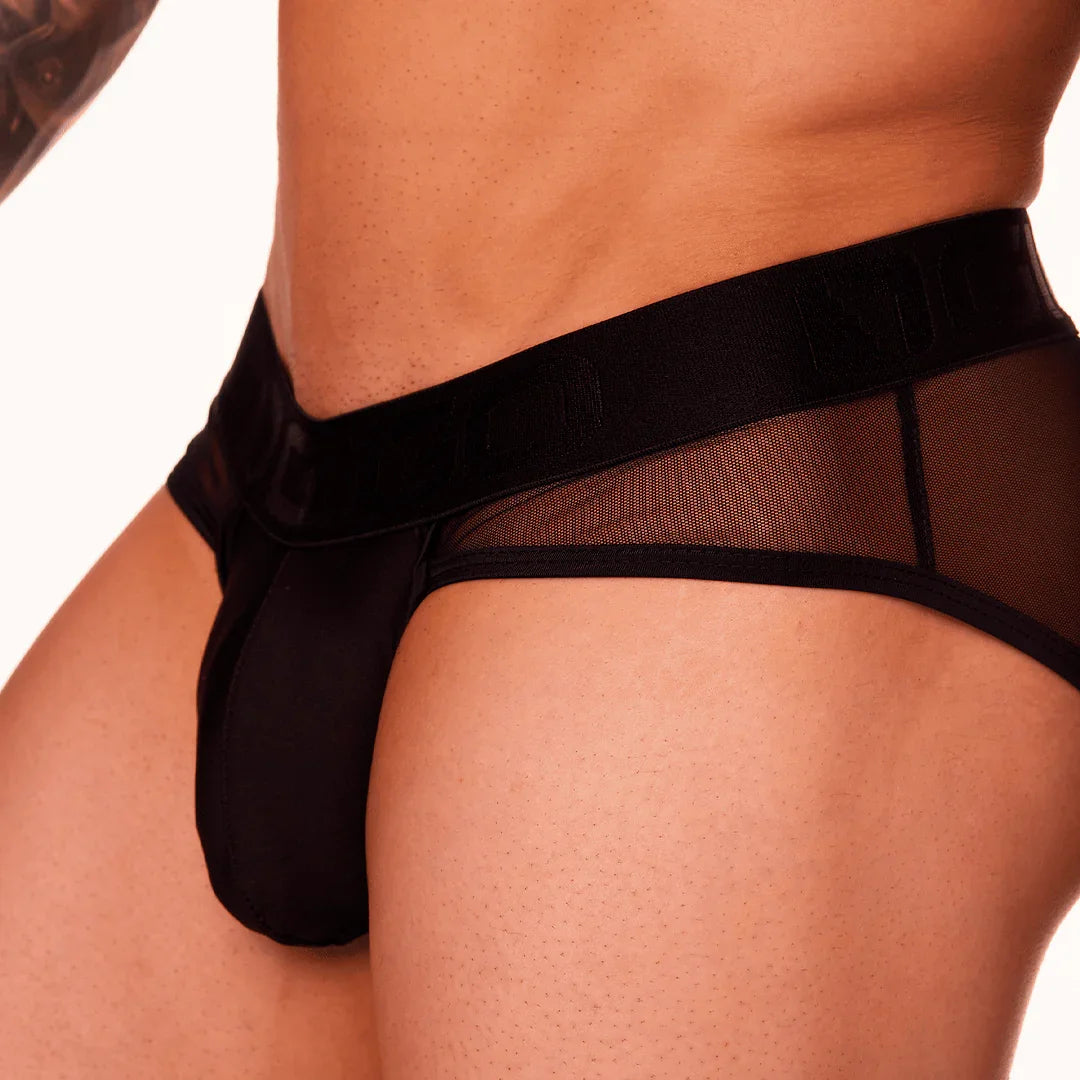
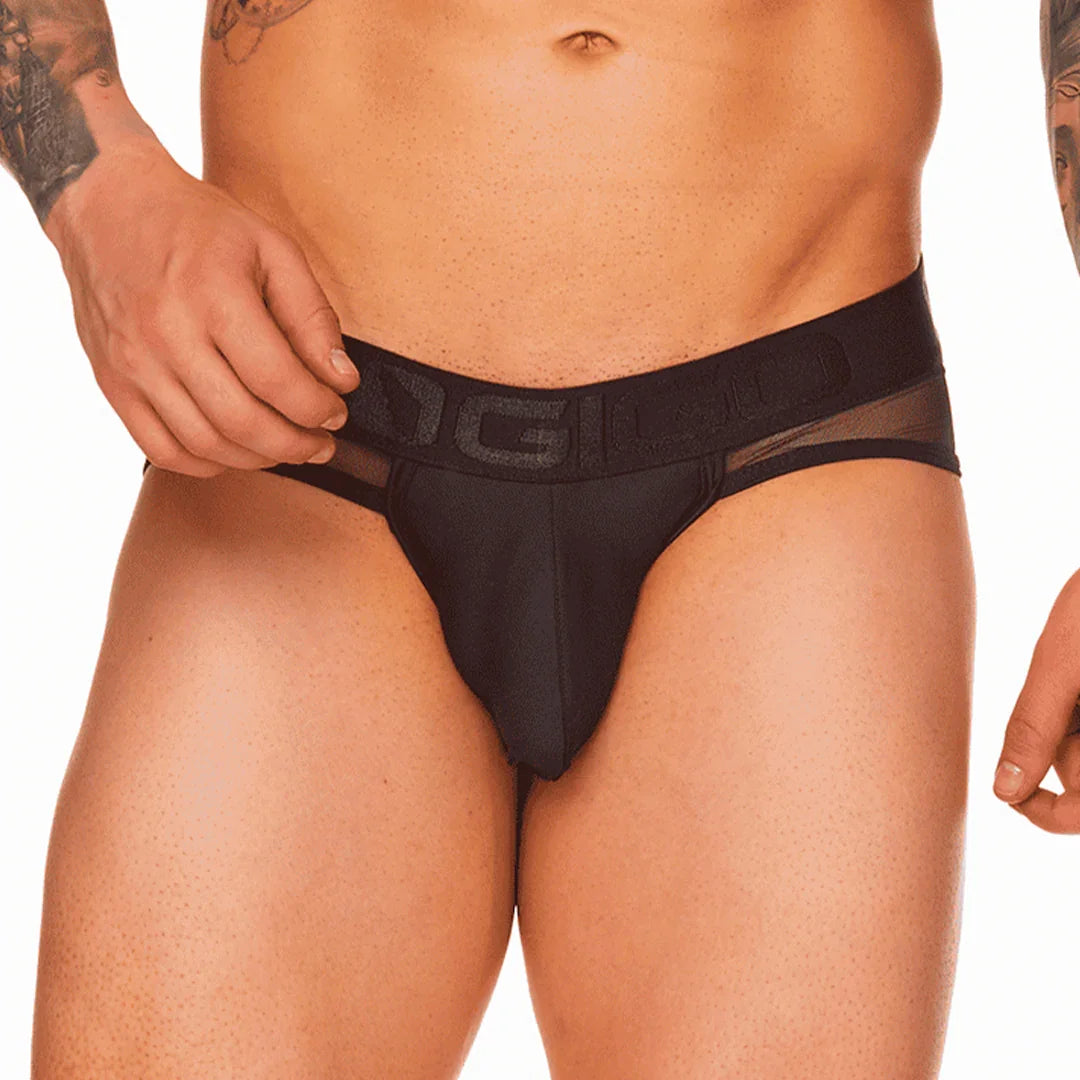
Photos can help you compare the pouch, waistband, side panels and coverage. They cannot establish the fiber percentages, drying speed or feel against your skin. The Mediterranean Brief images below illustrate underwear construction; they are not confirmation of a nylon blend.
When Nylon Underwear Makes Sense in Real Life
For daily wear, choose a fabric texture and cut you like wearing under your usual clothes. Compare the front, back and leg fit together; a smooth-looking fabric does not guarantee an invisible line under fitted pants.
For travel, plan enough pairs for your washing routine and check the care label before relying on a particular drying method. Drying time depends on the finished fabric, layers and conditions. Do not assume that every nylon pair is quick-drying or that it needs the same care.
For warm days or activity, review the actual construction and any supported product features. Test the fit while sitting, walking and moving normally. Choose another cut if you need different coverage rather than relying on nylon to change the design.
How to Choose the Right Size in Nylon Underwear
Measure your waist with a soft tape where you normally wear the waistband, typically just above the hip bones. Keep the tape level and comfortably fitted without pulling it tight. Compare that body measurement with the lower-body chart in the Gigo Size Guide.
If you fall between two Gigo sizes or directly on a shared boundary, choose the larger size as the recommended starting point. Then review the individual product for any style-specific fit notes. Do not size down only to make the garment look more defined.
For the full measurement and fit process, read how to choose the perfect size of men’s underwear. Check the waistband, pouch, back and leg openings while sitting and walking, not only while standing in a mirror.
Common mistakes to avoid when buying nylon underwear online
The first mistake is buying smaller because you think it will look better. A good fit should define the body without making the garment feel forced.
The second mistake is thinking all nylon feels the same. Fabric quality, weight, elasticity, and construction change the experience completely.
The third mistake is choosing only by color. A great color matters, but the silhouette and size must also match your needs.
The fourth mistake is ignoring the size chart. Many fit issues start there. Start with your own waist measurement rather than another brand’s size.
The fifth mistake is confusing support with pressure. Support should feel secure. It should not feel like the underwear is fighting your body.
The sixth mistake is expecting every silhouette to feel equal. A brief and a trunk can use similar fabric but feel completely different.
The seventh mistake is buying only based on the model photo. Product images help, but your body, habits, and comfort preference also matter.
The eighth mistake is expecting a too tight garment to stretch enough over time. Stretch is not a reason to accept a fit that stays restrictive.
The ninth mistake is not considering your outer clothing. Underwear can feel different under jeans, formal pants, shorts, or lounge clothing.
How to Compare Gigo Styles Before Ordering
The Men’s Underwear collection is the starting point for comparing cuts, colors and visible construction. Confirm the material of the individual product rather than treating the whole collection as nylon underwear.
If a listing does not show the complete blend, ask for the product’s fiber content before choosing it specifically for nylon. That is more useful than inferring material from a model photo, a smooth finish or a style name.
Final Thoughts
Men’s nylon underwear can work well when you like the particular fabric, silhouette and fit. To choose with more confidence, compare the blend, construction, coverage and body measurements together. Breathability and stretch should be assessed on the finished garment.
Explore men’s underwear for your next pair, or start with Gigo Underwear & Menswear when building a wider wardrobe.